If you have an ash tree in Piscataway, Edison, New Brunswick, Highland Park, or anywhere in Central New Jersey — it’s either already infested with emerald ash borer (EAB), already dead from EAB, or about to be. This isn’t alarmism. It’s the consensus of the NJ Department of Agriculture and every working arborist in the state since 2014.
Here’s how to identify EAB on your trees, why nearly every untreated ash needs to come down, and what your options are.
What is emerald ash borer?
Agrilus planipennis is a small metallic-green beetle (~1/2″ long) native to East Asia. It was first identified in Michigan in 2002, almost certainly arriving in wooden shipping pallets. Since then it has killed an estimated hundreds of millions of ash trees across the eastern half of North America. NJ confirmed its first EAB infestation in Bridgewater (Somerset County) in 2014. By 2017 it was confirmed in every county.
The beetle itself is mostly harmless. The damage is done by larvae, which tunnel under ash bark in winding S-shaped galleries that disrupt the tree’s ability to move water and nutrients. A single tree can host thousands of larvae.
Identification: 4 signs of EAB
1. Canopy dieback starting at the top
The first visible sign is dead branches in the upper third of the canopy — before any pest is visible. The tree starts re-sprouting from the trunk and lower branches as the upper canopy declines. By the time canopy dieback is severe, the tree is usually 2–3 years into infestation.
2. D-shaped exit holes
Adult beetles emerge from the bark in May–June, leaving distinctive D-shaped exit holes about 1/8″ wide. The flat side of the D faces down. These are often found on smoother bark sections of the trunk and major branches. If you find them, infestation is confirmed.
3. S-shaped galleries under the bark
Pull off a piece of loose bark on a declining branch and look for serpentine tunnels packed with sawdust-like frass. These galleries are diagnostic for EAB — no other pest leaves them in ash trees.
4. Heavy woodpecker activity
Woodpeckers find EAB larvae delicious. Excessive bark stripping (“blonding” — pale patches where the outer bark has been pecked off) is often the first thing homeowners notice. Once the woodpeckers have shown up, the tree is heavily infested.
Can my ash be saved?
Maybe — if you catch it very early. Systemic insecticide treatments (typically emamectin benzoate, sold under names like TREE-äge) injected into the trunk can protect ash trees against EAB. Treatments need to be repeated every 2–3 years and cost $200–$500 per tree per cycle.
Treatment is worthwhile if:
- Tree shows under 30% canopy dieback (treatment is generally not effective beyond 50% loss)
- Tree has significant landscape value (mature, well-placed, irreplaceable)
- Property owner is committed to ongoing 2–3 year treatment cycles indefinitely
For most ash trees in Central NJ residential yards, the honest math is removal — especially if the tree is already declining. We’ve removed many ashes over the years. Sometimes the right call is treatment, but more often the tree is too far gone.
Why dead ashes are urgent removals
EAB-killed ash trees are particularly dangerous to leave standing. Two reasons:
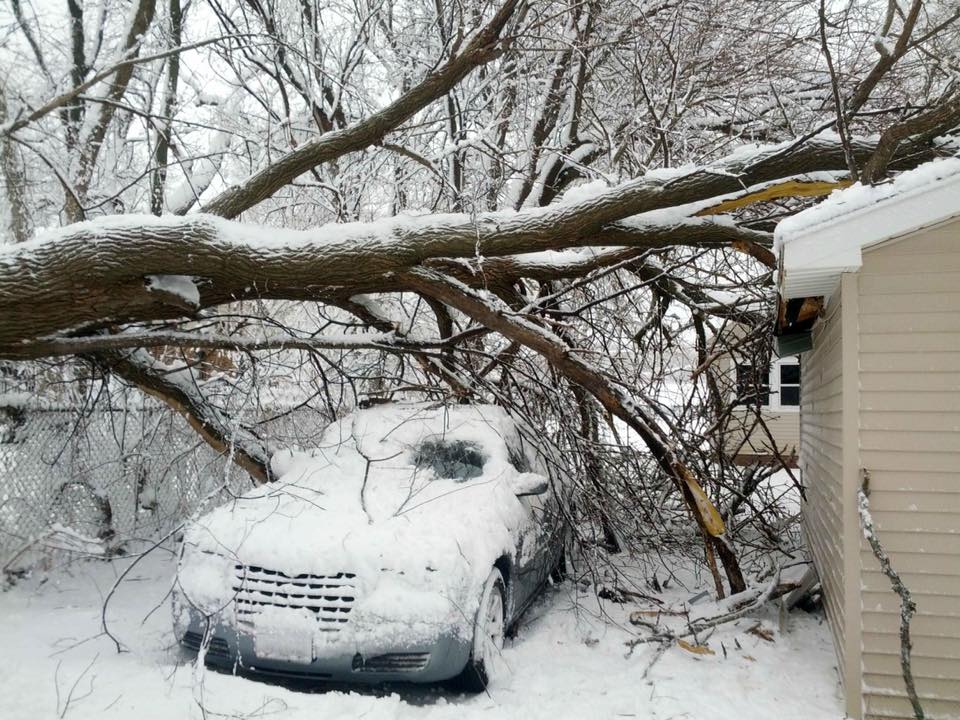
- Brittle, unpredictable wood. EAB galleries weaken the wood structurally. Dead ashes drop entire limbs (and sometimes whole trunks) without warning, often years before the tree visibly looks like it’s about to fall.
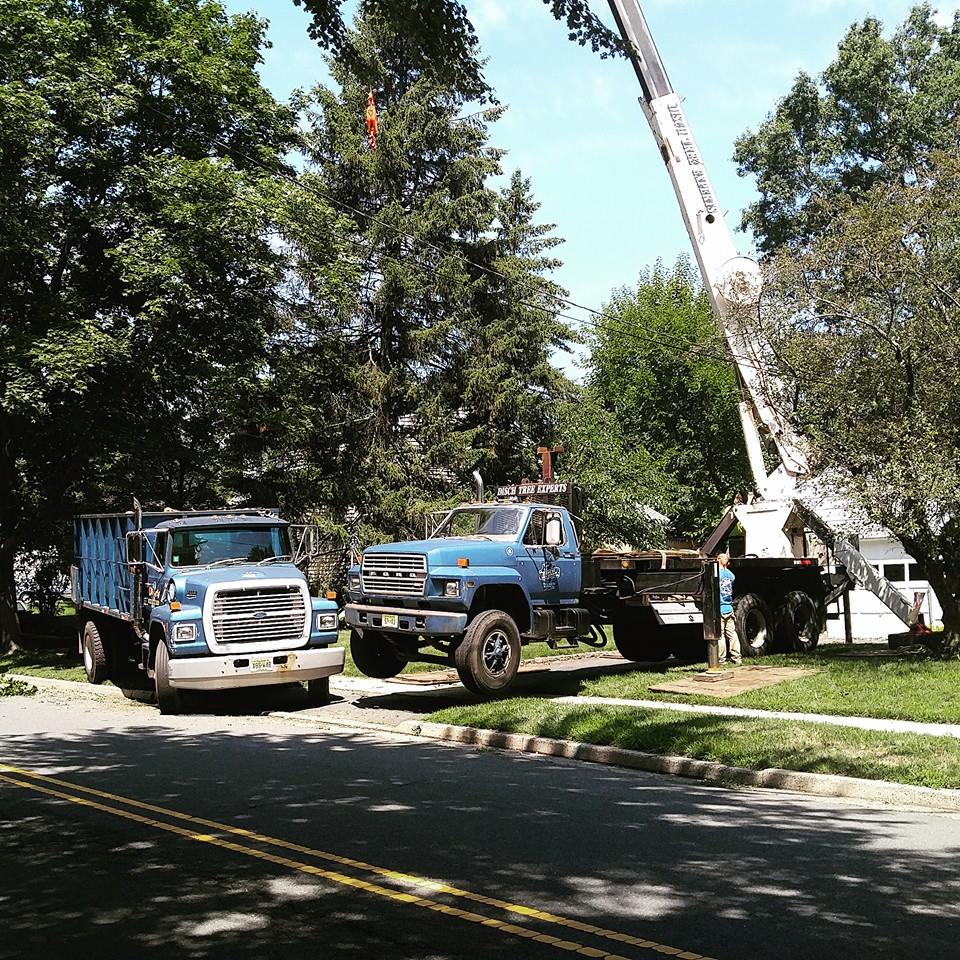
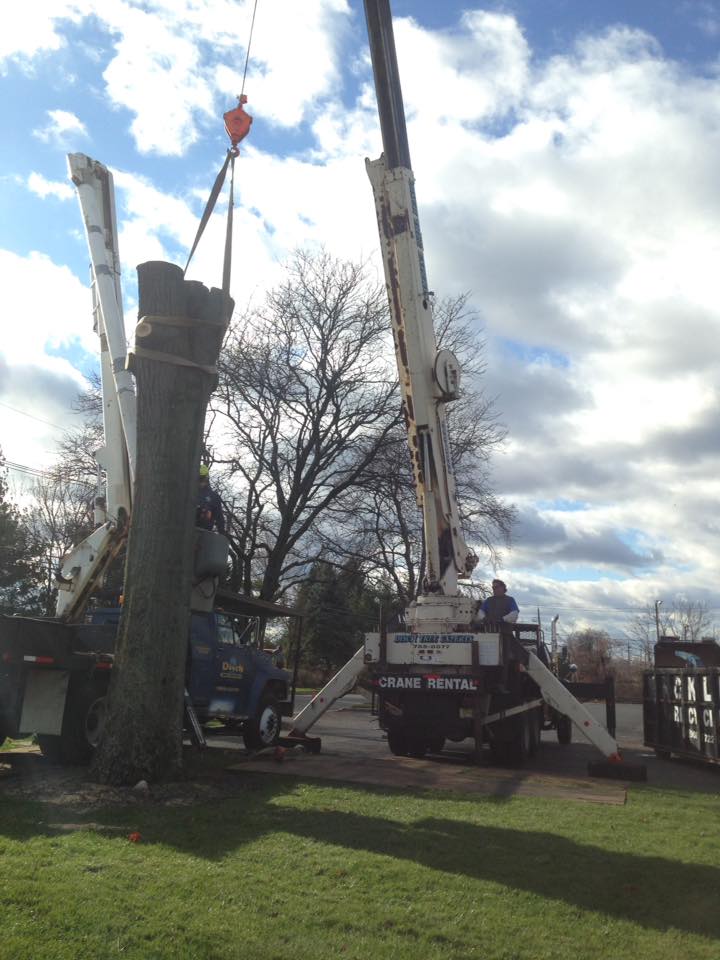
- Hazardous to climb. Once an ash has been dead a year or more, climbers can’t safely work it. The tree has to come down by crane or by mechanical felling — both more expensive than removing a healthy tree.
The window where EAB-killed ashes can be removed cheaply (climber + bucket truck) is short. Once they’re too brittle to climb, prices increase substantially.
Standard homeowners insurance does not cover removal of a dying tree. But if your dying ash falls and damages your house or car, your insurance covers the property damage AND removal of the fallen tree. Letting it fall is more expensive overall — not least because of repair downtime.
What about replanting?
Don’t replant ash. New ash plantings will face the same EAB pressure as established ones, and the next 20 years will be a steady fight. NJ-appropriate alternatives that fill similar landscape roles:
- For shade: American hornbeam, red maple (where appropriate), tulip poplar, sweetgum
- For street trees: swamp white oak, London plane tree, honey locust (thornless varieties)
- For ornamental: serviceberry, ironwood, sourwood
Have an ash tree to assess?
Free assessment, no pressure to remove if treatment makes sense. We’ll tell you honestly whether it’s worth saving or whether you’re better off removing now while the wood is still climbable.
How to identify ash species in your yard
Quick-and-dirty NJ ash identification (we’re looking for green ash, white ash, or black ash):
- Compound leaves with 5–11 leaflets — not single leaves like maples
- Opposite branching — pairs of branches/leaves directly across from each other (only ~5 NJ tree species have this; ash is the most common large one)
- Diamond-pattern bark on mature trees
- Compound seeds (samaras, often called “keys”) hanging in clusters
If you’re not sure whether you have an ash, send us a photo — happy to identify from a leaf shot.