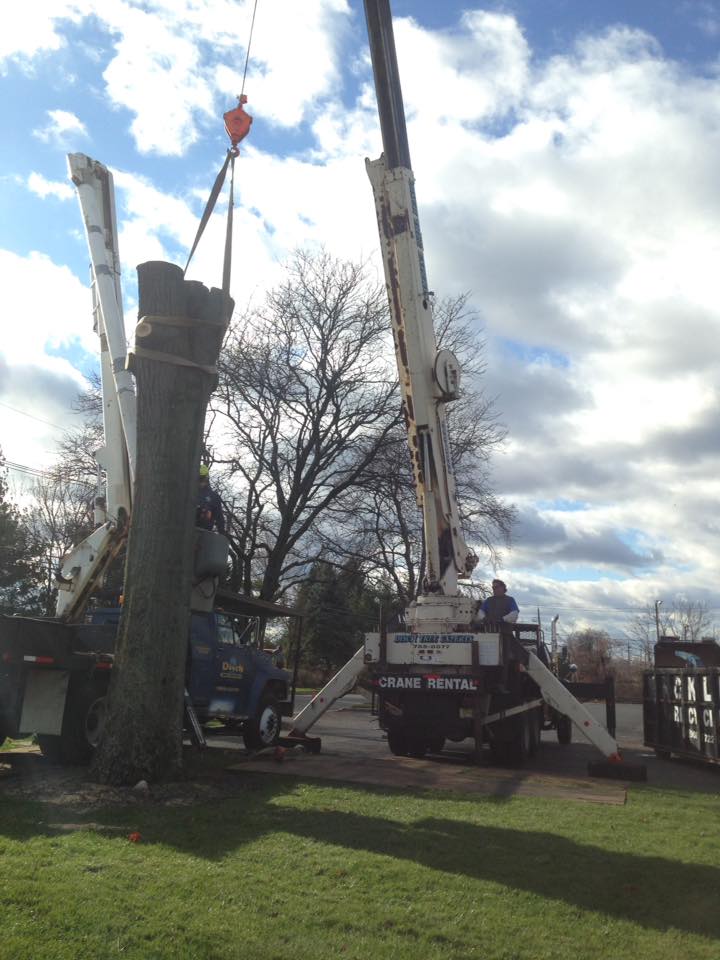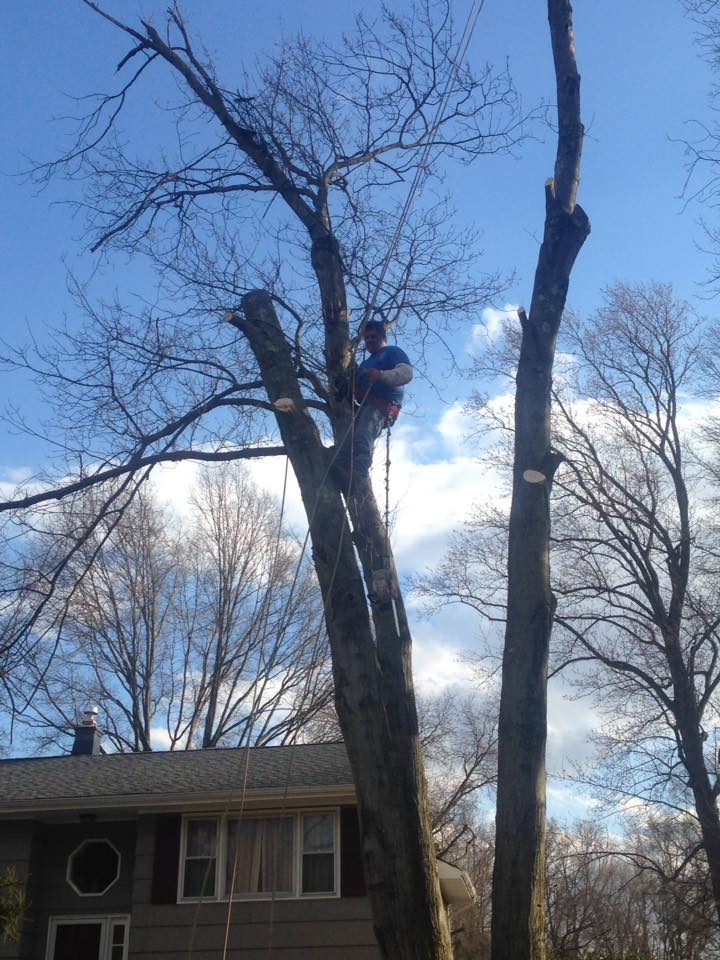
If you take one thing away from this article: do not prune oaks in New Jersey between April and October. Not even a small branch. Not even a deadwood cleanup. Wait for the dormant window — November through February — or call an arborist who knows why.
This isn’t a preference. It’s the difference between a healthy 200-year-old oak and a dead one in your yard by next summer.
Why the timing matters: oak wilt
Oak wilt is a fungal disease caused by Bretziella fagacearum. The fungus enters a tree through fresh wounds — pruning cuts, storm damage, lawn mower nicks on root flares, equipment damage. Once inside, it grows through the tree’s xylem (water-conducting tissue), clogging it. The tree essentially dies of thirst from the top down.
Two facts that make oak wilt particularly serious:
- Red oaks can die in 4–6 weeks after visible symptoms appear. White oaks die slower (1–3 years) but the outcome is the same.
- The fungus spreads through interconnected root systems. Oaks of the same species growing within 50 ft of each other often share root grafts. One infected tree can take out an entire grove.
NJ has confirmed oak wilt cases in multiple counties going back to 2008. The NJ Department of Agriculture and the NJ Forest Service treat it as a regulated pest.
How fresh pruning wounds invite the disease
Oak wilt spreads two ways. The first is through-root grafts (slow, local). The second is through sap beetles — tiny insects (Nitidulidae) that feed on tree sap and carry fungal spores between trees.
Sap beetles are active during warm months (April through October in NJ). They’re attracted to fresh wounds, where sap is exposed. A pruning cut on an oak in June essentially rings a dinner bell for any beetle carrying spores from a sick tree miles away.
Research from the University of Wisconsin (where oak wilt has been studied longest) shows sap beetles can be attracted to fresh oak wounds within 15 minutes of cutting during peak season. This is why the “just one quick branch” logic doesn’t work.
The safe window: November through February
Cold weather solves the problem. Sap beetles are inactive below ~50°F, the fungus itself doesn’t actively spread in dormant tissue, and the tree compartmentalizes the wound much faster in early spring than it would have if cut in midsummer.
For Central NJ specifically, the practical window is mid-November through late February. We push to the early end of that range when possible — the goal is wounds healed before bud break in March.
What if a branch breaks in summer?
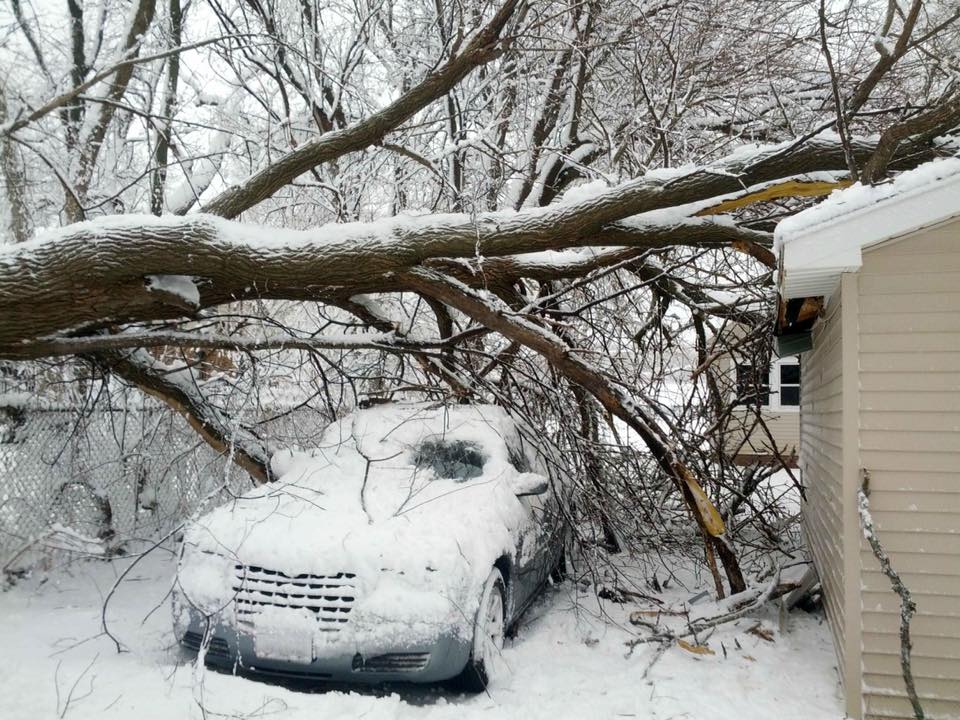
Storm damage in July, a limb falls, you have a fresh wound on an oak whether you wanted one or not. Three steps:
- Seal the wound immediately. Spray pruning sealant, shellac, or even latex paint on the exposed wood. This is the only situation where wound sealants help — oak wilt protocol specifically. (For most other tree species and wounds, sealants are useless or harmful.)
- Don’t do any additional pruning — including cleaning up the broken stub. Wait for dormancy.
- Call an arborist for documentation. If a wound is unavoidable, having a certified arborist note the date and protocol followed protects you if symptoms develop later.
Other oak care that DOES need timing
Beyond the oak wilt window, oaks have other timing-sensitive care:
- Spring fertilization — if soil testing indicates deficiency, mid-March to early May is ideal.
- Spongy moth (gypsy moth) treatment — egg masses scraped November through April; spraying for caterpillars early May to mid-June.
- Spotted lanternfly egg mass scraping — October through April. Full guide here.
- Cabling and bracing — can be done year-round on oaks since cabling doesn’t create wounds.
Recognizing oak wilt symptoms
If you suspect an oak in your yard already has it:
- Red oak group (red, pin, scarlet, black oak): rapid bronzing of leaves starting at the canopy edges, progressing inward. Whole canopy may turn brown in 2–4 weeks. Leaves drop while still partly green.
- White oak group (white, bur, swamp white, post oak): slower decline, individual branches dying back over multiple seasons.
- Pressure pads under bark: distinctive raised mat-like structures with a sweet fermented odor — a key diagnostic.
If you see these, call us immediately. Confirmed oak wilt requires fast action — root graft severing, removal of infected trees, and surveillance of nearby oaks.
Have an oak that needs work?
We schedule oak pruning between November and February. Cabling, bracing, and hazard assessment can happen any time of year. If you’re worried about oak wilt symptoms, we can do a same-week diagnostic visit.
Quick reference
| Activity | Best timing |
|---|---|
| Routine oak pruning | Nov – Feb only |
| Hazard branch removal (planned) | Nov – Feb only |
| Storm-damage emergency cuts | Any time + immediate sealant |
| Cabling / bracing | Any time |
| Diagnostic / hazard assessment | Any time |
| Oak wilt suspicion | Same-week response |
40 years of working with NJ oaks — this is the rule we never bend. Wait for November.