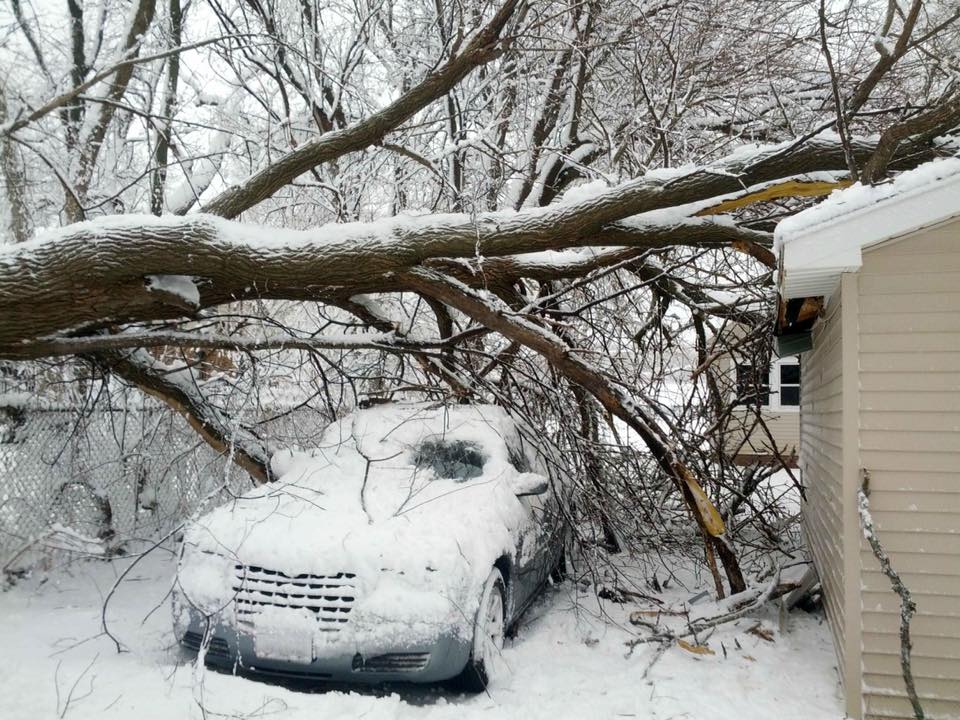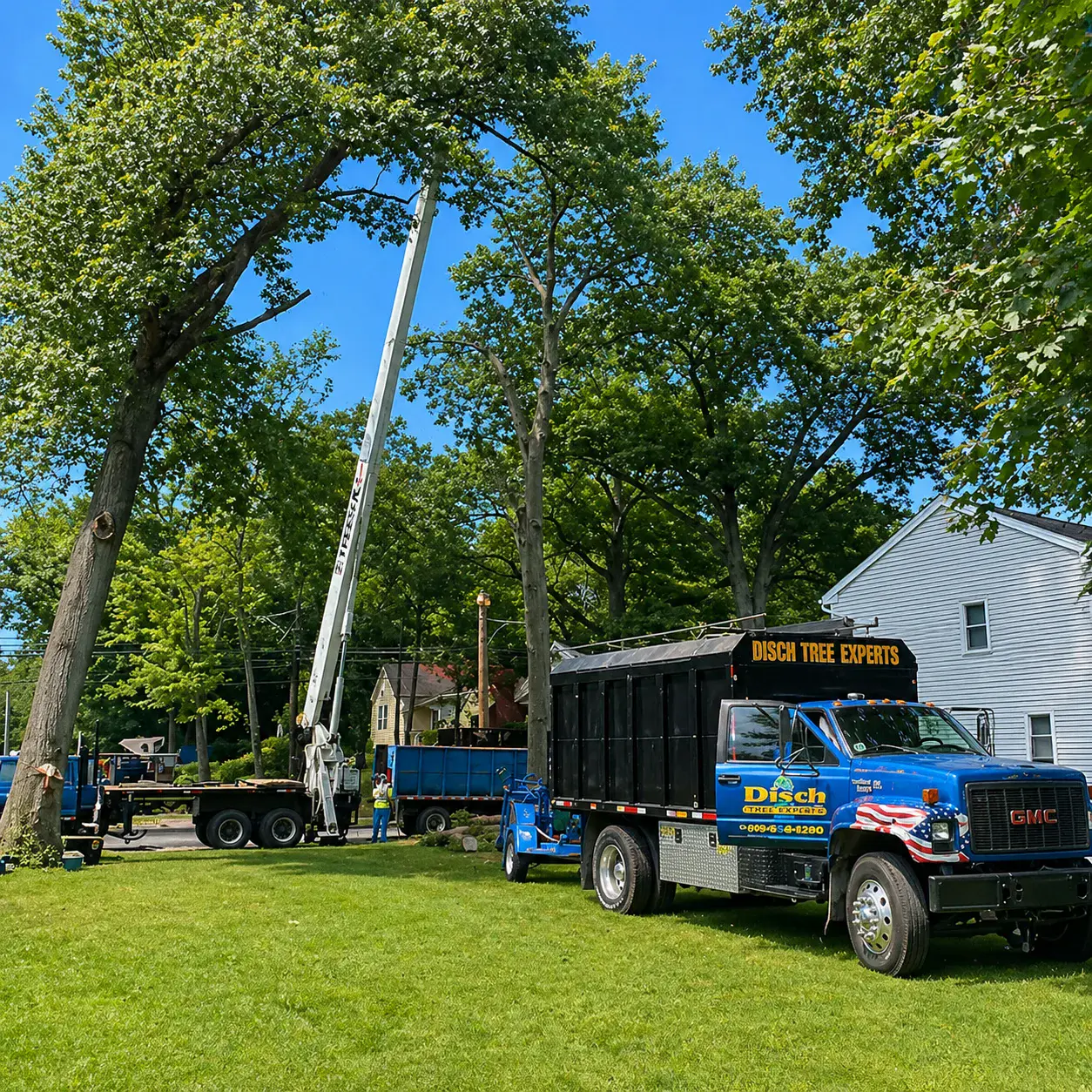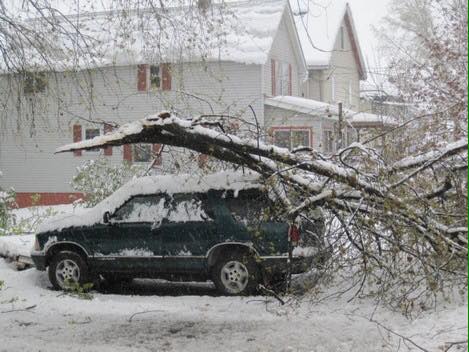
The hours after a major storm are when the most expensive mistakes happen. Adrenaline is high, contractors are pulling up to your driveway, your insurance company hasn’t opened yet, and there’s a tree on your house. Here’s the right order of operations — from someone who’s been running 24/7 emergency response in Central NJ for 40 years.
Hour 0–1: Safety first, photos second
Get away from anything that could fall
If a tree is on your house, leave the rooms underneath/near the impact. Damaged trees often shift over the next several hours as wood settles, water saturates, and wind continues. Treat anything still partly attached as actively dangerous.
Stay away from downed wires
Always assume a downed wire is live. Maintain at least 30 ft of distance and call 911 + your power company (PSE&G: 800-436-7734, JCP&L: 888-544-4877). Trees ON wires are the same hazard — do not approach the tree until power is confirmed off.
Photograph everything
Before any cleanup happens, take phone photos from multiple angles:
- Wide shots showing the tree, the structure damage, and the property context
- Close-ups of the impact point and damage
- The base of the fallen tree (root plate, broken trunk — insurance adjusters look at this)
- Any damage to fences, vehicles, gardens, decks, AC units
Date-stamp matters. Most phones do this automatically, but verify EXIF is on. These photos are your insurance claim.
Hour 1–6: Call insurance, then a real tree service
Insurance first
Most homeowners policies cover tree-on-structure damage and the cost of removing the tree from the structure. They typically do not cover removing the rest of the tree from your yard if it didn’t hit anything covered. Read your specific policy or ask your agent.
Open the claim as soon as the insurance company answers the phone. The claim number unlocks emergency-services authorization, often including approved emergency cleanup contractors. Don’t sign anything before that call.
Detailed coverage explanation: tree damage insurance claims guide.
Then call a licensed local tree service — not a door-knocker
Within hours of any major NJ storm, out-of-state crews show up driving unmarked trucks, going door to door. Almost without exception they:
- Have no NJ Licensed Tree Care Operator (LTCO) number
- Demand large cash deposits up front (“to cover the equipment we’ll bring back tomorrow”)
- Disappear with the deposit, or do half a job and leave
- Cannot be located by you, your insurance, or the courts afterward
The NJ Division of Consumer Affairs issues storm-chaser warnings every season. Your insurance company will not reimburse cash payments to unlicensed contractors.
Ask for the NJ LTCO number. Real companies have it memorized or printed on the truck. Verify online at njtreeexperts.org. Also confirm: physical Central NJ business address, working phone with company-name voicemail, and a Certificate of Insurance they can email within an hour.
Hour 6–24: Triage by hazard, not by visibility
If you have multiple damaged trees, or a tree that’s damaged but still standing, here’s the priority order a tree-service triage call works in:
- Trees on/in structures — immediate, with insurance adjuster ideally on the way
- Trees blocking driveways or roads — immediate
- Trees on/near power lines — coordinate with utility before any work
- Hanging branches over walking areas, vehicles, decks — same-day if accessible, otherwise next-day
- Damaged but stable trees (split unions, partial uprooting, lean) — assessed within 1–2 days, removed/treated within a week
- Damaged but stable away from structures — can wait days or weeks for scheduled removal
It’s tempting to start with the most visible damage. Don’t. Hidden hazards (a tree partly uprooted but still upright) are more likely to cause secondary damage in the next storm than the already-fallen tree visible from the street.
Hour 24–72: Documentation and the long-tail decisions
Save the receipts
Anything you spend on emergency mitigation — tarping, boarding broken windows, hotel stays if displaced, even chainsaw rentals — is potentially reimbursable. Save receipts and document what each was for. Your adjuster will ask.
Don’t sign assignments of benefits
Some contractors will ask you to sign an “Assignment of Benefits” (AOB) form. This transfers your insurance claim rights to them. Don’t sign these. Pay your contractor directly and let your insurance reimburse you.
Decide on remaining trees
If a tree partially failed (lost a major limb, partial uprooting that’s still standing), now’s the time to decide whether the remaining tree comes down or gets stabilized. Our hazard assessment guide covers what to look for. Often the answer is “remove it now while there’s already a crew here” — cheaper than mobilizing again later.
Tree on the roof at 2 a.m.?
We answer 24/7. Crews stage equipment after every NJ storm so we can roll fast. Direct line, no after-hours voicemail.
What we wish every customer knew
The customers who fare best after a storm are the ones who:
- Don’t panic-sign anything
- Photograph thoroughly before any cleanup
- Use a known, local, licensed tree service
- Coordinate with insurance from hour one
- Treat “damaged but standing” trees as urgent — not just the obvious ones
The customers who lose money are the ones who pay cash to a stranger driving an unmarked truck. Don’t do that.