Most homeowners hate calling for a tree removal quote because they don’t know if they’re about to be quoted $400 or $4,000 — and they don’t know how to tell which one is fair.
So here’s the honest version, written by someone who’s been pricing tree work in Piscataway, Edison, New Brunswick, and the rest of Middlesex County for 40 years. Real ranges, real factors, and the questions that should bring a quote down (or up) for legitimate reasons.
The honest range for Central NJ in 2026
For typical residential tree removals in our service area:
- $300 – $500 — Small ornamental trees under 30 ft (dogwood, ornamental cherry, mid-sized arborvitae)
- $500 – $1,200 — Medium hardwoods 30–50 ft with reasonable access (most maples, locusts, pin oaks)
- $1,200 – $2,500 — Large hardwoods 50–75 ft, or mid-sized trees in tight spots
- $2,500 – $6,000+ — Very large hardwoods over 75 ft, hazard trees over structures, crane-required jobs
These are full-removal prices — tree on the ground, brush chipped, logs cut to manageable lengths, work area raked. They generally include haul-away of the brush. Stump grinding is usually quoted separately at $100–$400 per stump depending on diameter.
Disch quotes the job, not the hour. You see the number before we start. If we hit something unexpected mid-job, we don’t change the price — we eat it. Quoting the job protects you from feeling rushed or surprised; quoting the hour protects only the crew.
The 6 factors that move price (in order of impact)
1. Size of the tree
The biggest variable. A tree’s removal cost scales roughly with the cube of its trunk diameter, because bigger trees mean more wood mass to cut, more brush to chip, more bucking, and more crane time. A 90-ft oak isn’t 3x the cost of a 30-ft oak — it’s often 6–8x.
2. Proximity to wires, houses, fences, gardens
An open-yard removal lets us drop the tree in pieces. A tree over a roof, near power lines, or surrounded by a garden requires roping or crane support — rigging every section down piece by piece on controlled lines. That can double the labor hours.
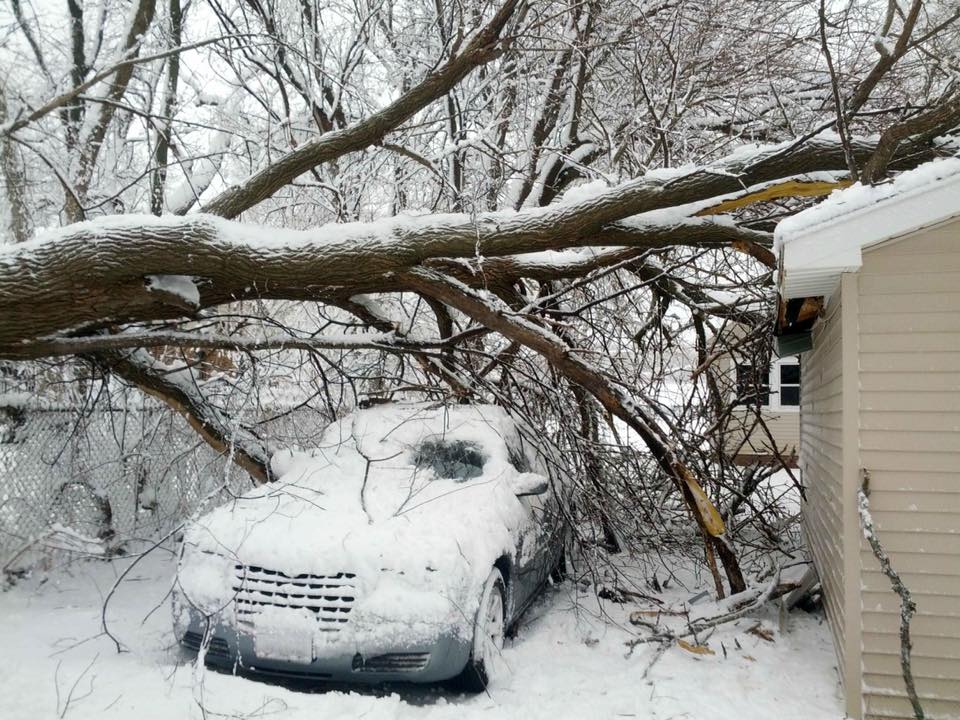
The most expensive setup is “tree leaning over the house, primary wires through the canopy, no driveway access for the bucket truck.” That’s when prices break $4,000.
3. Ground access for trucks and equipment
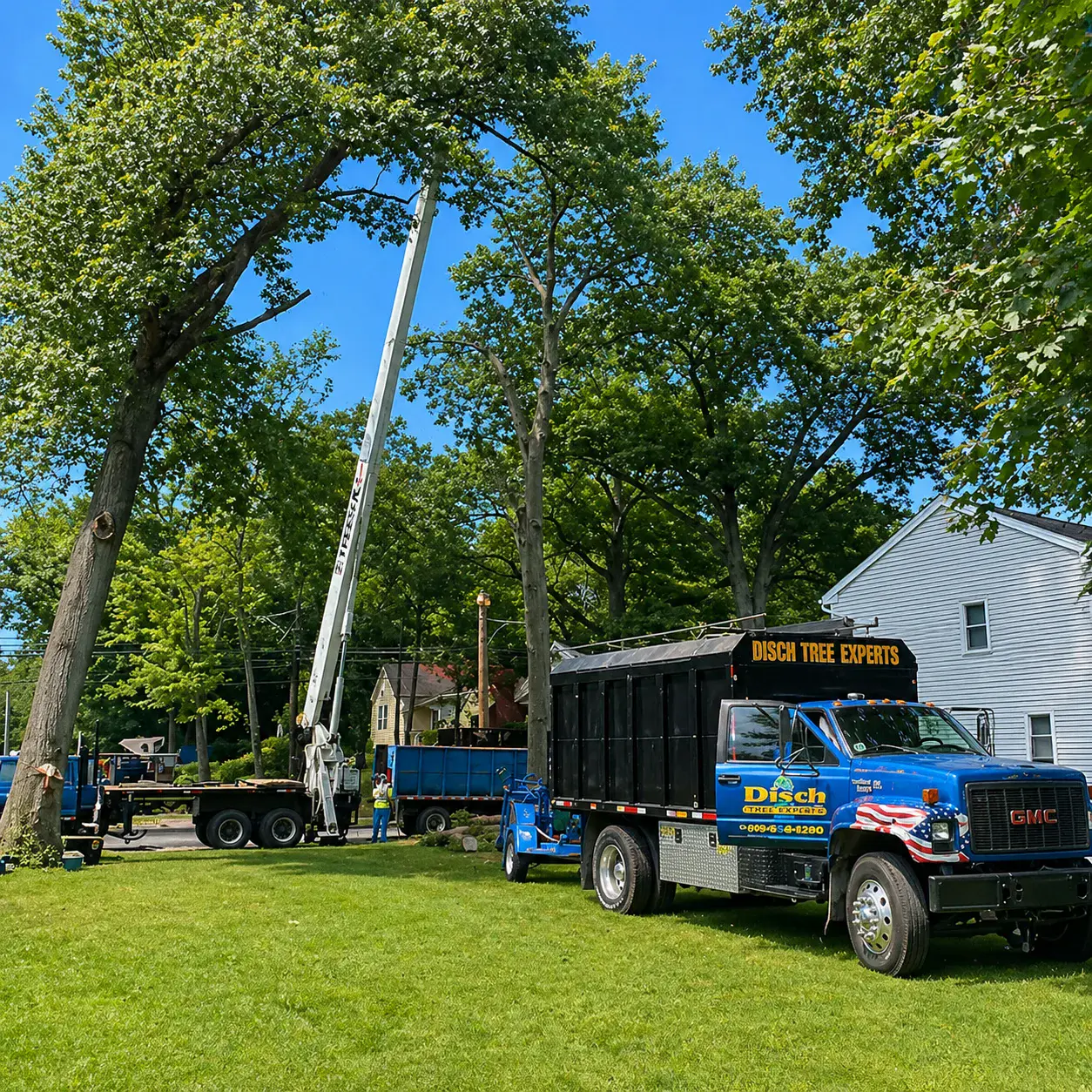
If the bucket truck and chipper can park within 50 ft of the tree on a hard surface, we’re fast and cheap. If the only access is across a soft lawn (need plywood mats), through a gate (limited width), or down a steep yard (winch and drag), labor goes up.
Backyard trees behind locked fences or down embankments are the hidden cost driver people don’t expect.
4. Crane requirement
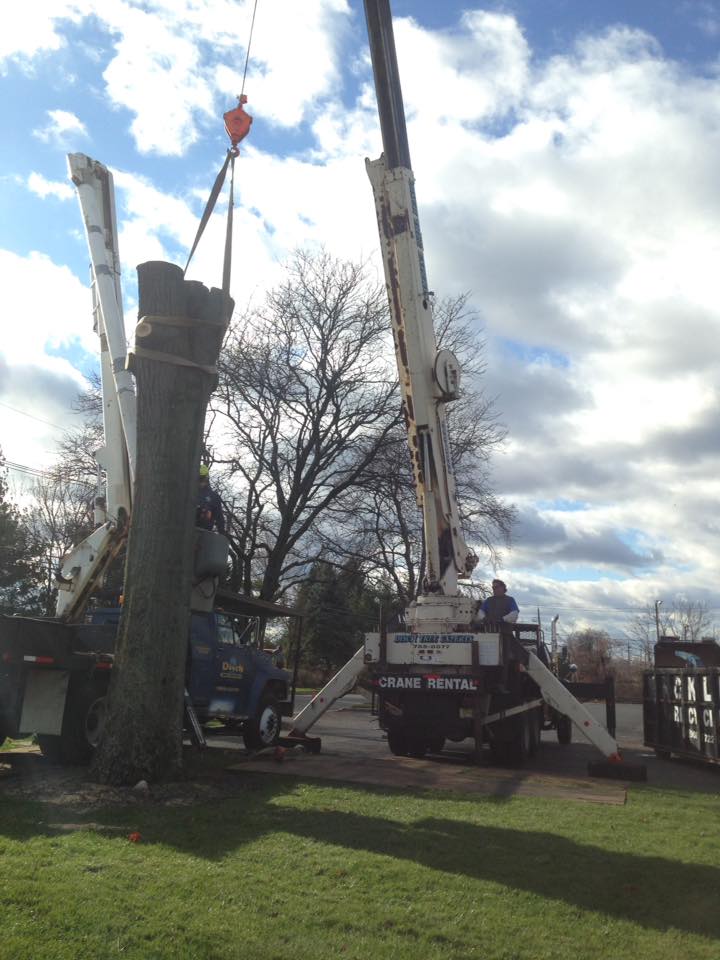
For trees over a structure, over expensive landscaping, or where rigging by hand would put the crew in unsafe positions, we bring crane support. Crane work is dramatically faster and safer — but the equipment day-rate adds $800–$1,500 to a job that otherwise would have run $1,500.
The good news: crane jobs are cleaner in addition to safer. The whole tree comes down in 4–6 controlled lifts instead of 30 individual rigging cuts. Here’s what crane-supported removal actually looks like.
5. Wood species and condition
Hardwoods (oak, maple, hickory) take more cutting time and dull chains faster than softwoods (pine, spruce). Dead and brittle trees are more expensive than live trees, not less — because they’re unpredictable to climb and rig (limbs snap unexpectedly, trunk wood breaks where you don’t want it). Long-dead pine is the worst of both: dangerous to climb AND no resale value.
6. What you want done with the wood
Three options:
- Haul-away (default): Brush chipped on site, logs taken with us. Included in standard pricing.
- Logs left for firewood: We bucked logs into 16–18″ lengths and stack wherever you want. No charge to do this — saves us hauling cost, saves you firewood money.
- Mulch left on site: We can blow chips into a pile or spread on garden beds. Saves us hauling, gives you free landscape mulch.
The trade-off: leaving the wood means cleanup that day takes longer. We don’t charge extra; it’s your call.
What should make a quote go DOWN
- Tree in an open yard with truck access — quick job
- You’re willing to take the wood (saves haul cost)
- Multiple trees on the same property the same day (mobilization is the same cost; we discount the second and third)
- Off-season scheduling (January–March is the slow period)
- Stump grinding bundled with removal same day vs separate trip
What should make a quote go UP — legitimately
- Crane required because of structure proximity
- Permits required (some Central NJ towns regulate large tree removal — we pull these for you)
- Power line drop or shutdown coordination with PSE&G or JCP&L
- Soft ground requiring plywood matting under the bucket truck
- After-hours or weekend emergency response
Red flags in a quote
Things that should make you call another company:
- Hourly billing with no cap. You’re writing a blank check.
- No proof of insurance. If a $50,000 tree falls on your house and the company isn’t insured, that’s your homeowners claim plus a lawsuit.
- No NJ Licensed Tree Care Operator (LTCO) number. NJ requires this for any commercial tree work. Asking for the LTCO number is the fastest way to weed out fly-by-night crews.
- Door-knocking solicitors after a storm. Almost always out-of-state crews following the damage. They take deposits and disappear.
- Big upfront deposit. A small deposit (10–20%) is normal for scheduled work. 50%+ upfront is a scam pattern.
Get an honest written quote
Free, no pressure, on-site walk-through. Most estimates take 15 minutes. We tell you what it’ll cost, what we’d recommend (including “don’t remove this tree, just prune it” when that’s the right call), and you decide.
What “the cheapest quote” usually means
The honest reality: in this industry, the lowest quote is often the one without insurance, without an LTCO, or from someone who’s going to add “extras” once they’re on site. We’ve been called by homeowners more than once to clean up after a half-finished job from a $200-cheaper crew that abandoned them.
What you’re paying for with a licensed, insured, established tree company isn’t just the cutting — it’s the assurance that if something goes wrong (a limb hits the house, a piece of equipment damages the lawn, someone gets hurt), the cost falls on the contractor’s insurance, not your homeowners policy.
40 years on, that’s the difference. Get three quotes, ask for the LTCO and COI on each, and pick the one in the middle.